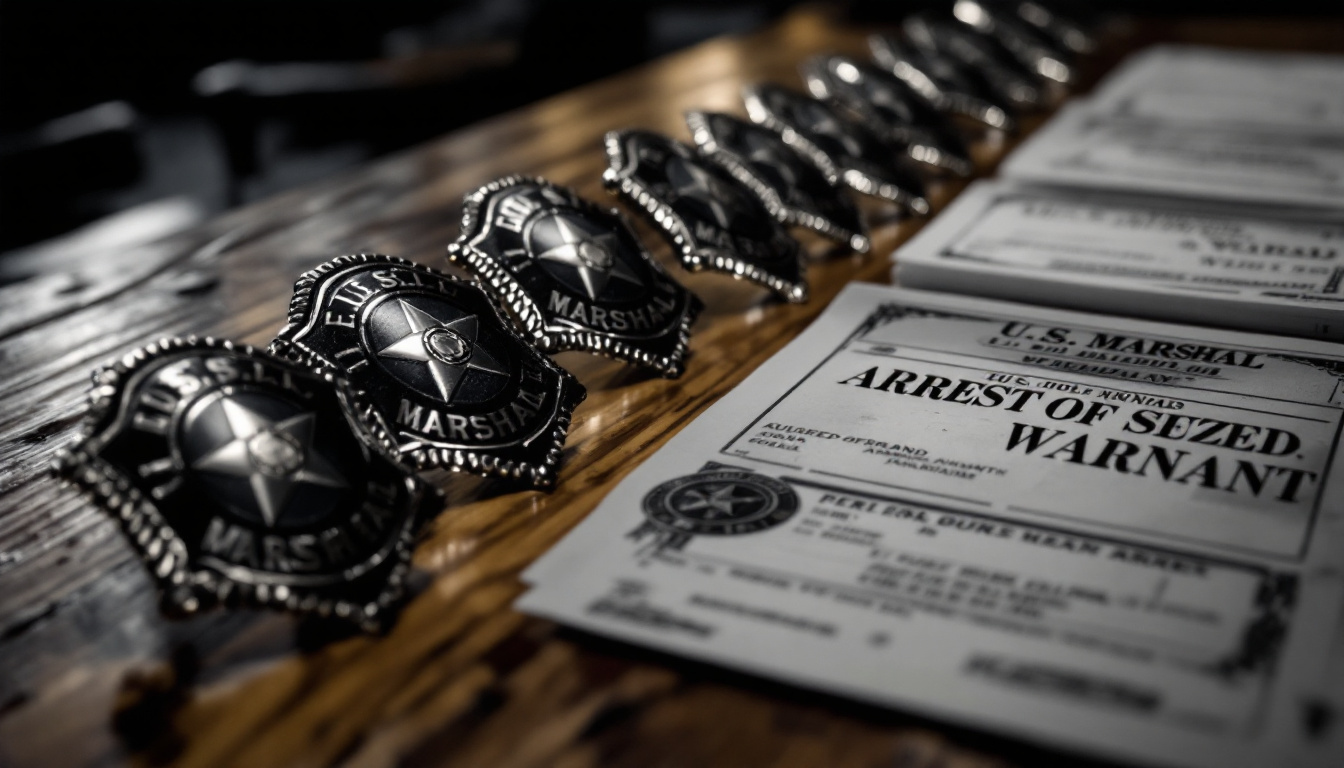
Somewhere in the St. Louis Metro Area, a fugitive wanted for homicide woke up on the morning of July 4th thinking he'd gotten away with it. By sundown, he was in handcuffs — along with 223 of his closest friends.
Operation Patriot Shield launched on June 1, 2026. It ended with 224 arrests across Missouri and Illinois, 32 firearms seized, and three missing children recovered.
The operation was a joint effort by the U.S. Marshals Service under U.S. Marshal Steven Lewis of the Eastern District of Missouri and U.S. Marshal David C. Davis of the Southern District of Illinois. The arrest warrants broke down like this: 31% for narcotics charges, 28% for weapons offenses, and 20% for violent crimes including homicide. Another 16 arrests were linked to gangs in Illinois. Six more were gang-related in Missouri. The charges also included criminal sexual assault, child sexual exploitation, and human smuggling.
These weren't jaywalkers.
"This work highlights the mission and accomplishments of the men and women of the United States Marshals Service," Lewis said after the operation wrapped. Davis called it "an intensive effort by the U.S. Marshals Service in the apprehension of the most violent offenders."
The Marshals didn't work alone. The operation pulled in the FBI, ATF, DEA, ICE, HSI, IRS, and USPIS through the Homeland Security Task Force. Operation Patriot Shield itself ran under the umbrella of a broader nationwide initiative called Operation Take Back America. Since June 3, the U.S. Attorney's Office for the Eastern District of Missouri under Thomas C. Albus has indicted 35 people. The Southern District of Illinois under U.S. Attorney Steven D. Weinhoeft added 11 more indictments in June alone.
"Our goal with Operation Patriot Shield is to try to head off the typical summer surge in violent crime," Albus said. "Those indictments represent just a snapshot of the work we do every day."
A snapshot. Thirty-five federal indictments in a month is a snapshot.
Now, we know what the usual crowd will say. They'll call it heavy-handed. They'll worry about "over-policing." They'll find a way to frame 224 fugitive arrests — people already wanted by the law, already charged, already running — as some kind of civil liberties problem.
Weinhoeft had a different take. "Operation Patriot Shield is about more than arrests," he said. "It is about reclaiming safe communities."
Here's what doesn't get reclaimed when these people stay on the street: the fentanyl keeps flowing, the heroin keeps moving, the methamphetamines keep hitting neighborhoods where kids walk to school. The 32 firearms seized weren't collector's items sitting in gun safes. They were in the hands of people already wanted for violent crimes.
Three missing children were found during this operation. Three kids. That detail tends to get buried under the big arrest number, but it shouldn't. Whatever else you think about federal law enforcement priorities, those three kids are home because somebody kicked in a door.
The operation covered both states, pulled resources from nearly every federal law enforcement agency with a badge, and produced results that would make any prosecutor's quarterly report look like a rough draft. Townhall first reported the results timed to the Independence Day weekend.
Two hundred twenty-four fugitives off the streets. Thirty-two guns out of criminal hands. Three children found. All in about five weeks.
Some people spent the Fourth lighting fireworks. Others spent it in booking.