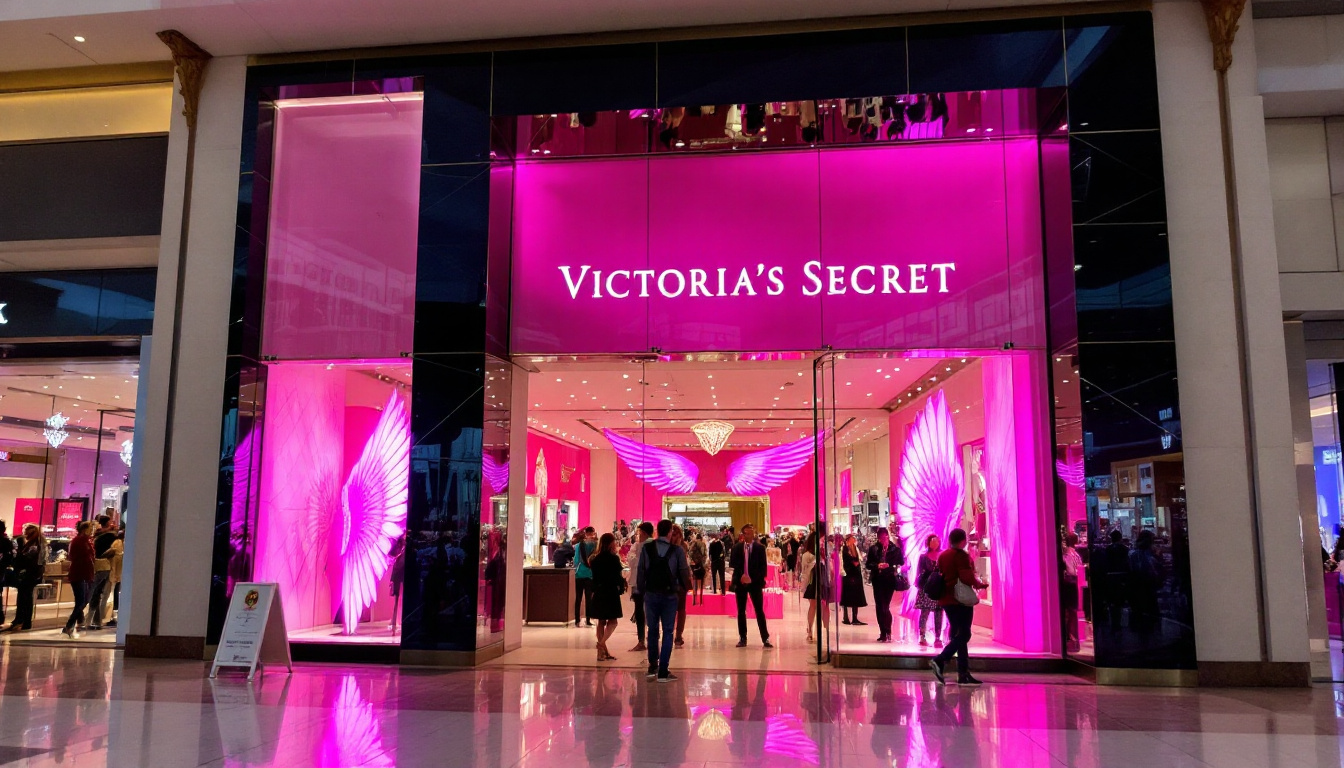
Victoria's Secret did something corporate America rarely has the guts to do — it admitted its woke rebrand was a disaster, went back to what actually works, and watched its stock nearly double to an all-time high of $80 per share. Capitalism has spoken, and it turns out women want to buy lingerie from a lingerie company, not attend a lecture on body politics.
Who could have possibly predicted this? Oh right. All of us. Every single one of us.
Here's the timeline of self-inflicted corporate stupidity. In 2021, Victoria's Secret was spun off from L Brands and immediately decided the best business strategy was to torch everything that made the brand iconic. Out went the Angels — the supermodels in diamond-encrusted bras and wings who built a billion-dollar empire. In came the "VS Collective," a splashy rollout of celebrity advisors meant to promote "female empowerment" that everyone — left and right — saw as performative nonsense. The company stopped bragging about being a destination for bra fittings. It stopped being sexy. It stopped being Victoria's Secret.
The stock cratered from $57 to barely $20 per share in a single year. Shocking absolutely nobody.
Then CEO Hillary Super — the company's first female CEO, formerly of Anthropologie and Savage X Fenty — did the unthinkable in corporate America. She reversed course. As she told Fortune, the company had fallen into a trap where "that natural human reaction is to want to stay out of controversy" led them to strip away everything that made the brand matter.
The real turning point came at the October 2025 fashion show. Model Jasmine Tookes opened the show nine months pregnant in gold wings. Longtime Angel Adriana Lima returned. WNBA star Angel Reese walked. The message was "same wings, different world" — embrace the glamour and heritage without the old body-shaming baggage, but also without the performative box-checking that Super called inauthentic.
The market's response? Q1 2026 earnings came in at $0.60 per share — nearly double what Wall Street expected. Net sales jumped 15% to $1.56 billion. The company posted its fourth consecutive quarter of positive comparable sales with double-digit growth in new customer acquisition, particularly among shoppers ages 18 to 24. Gen-Z is buying bras from Victoria's Secret again. Let that sink in.
The company even changed its stock ticker from VSCO to VSXY in May 2026. Super called it "a marker of who we are today." Translation: we're done pretending we're not a sexy lingerie brand.
Victoria's Secret raised its full-year sales guidance to between $7.03 billion and $7.13 billion and bumped adjusted operating income guidance to between $550 million and $580 million — more than $100 million above previous estimates. Goldman Sachs analyst Brooke Roach called it "a very strong result" with "solid top-line performance with strength across all channels including North America stores, Direct, and International."
CFO Scott Sekella credited the turnaround to "higher regular-price selling, reduced promotions, and leveraging buying and occupancy expenses." In English: they stopped slashing prices out of desperation and started selling products people actually wanted at full price.
Louder with Crowder featured the story this week, and the lesson is one every boardroom in America should tattoo on the conference room wall: go woke, go broke. Go back, get stacked. Victoria's Secret hemorrhaged cash for years chasing an ideology nobody was buying — literally. The second they returned to selling what customers actually wanted, the money came flooding back.
Corporate America, take notes. Your customers are not a sociology seminar. They're people with wallets, and they vote with every dollar.