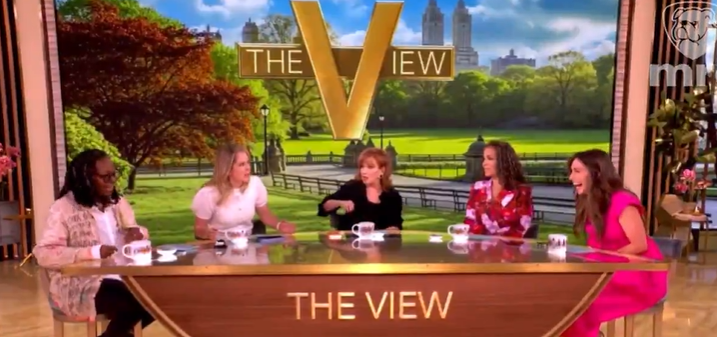
Whoopi Goldberg looked straight into the camera on ABC's The View this week and declared that "no one wants voter ID laws." She said it with the confidence of someone who has never once checked a poll on the subject. Roughly 80% of Americans — across party lines — support requiring identification to vote.
So either Whoopi doesn't know 80% of the country exists, or she's decided they don't count.
The segment centered on the SAVE America Act, which passed the House of Representatives and now awaits a Senate vote. The bill includes provisions requiring voters to show identification at the polls. President Trump has pushed the legislation as a safeguard for election integrity. Goldberg wasn't having it.
She told viewers that Trump "torpedoed the bill because he wants another bill signed" and that the goal was to "force people to have ID when they come to vote." Force. As if proving you are who you say you are before casting a ballot in a democratic republic is some kind of authoritarian crackdown.
Co-host Joy Behar backed her up with the equally bold claim: "Nobody wants it." She then added, "It's called the SAVE America Act, which is ironic, because it's not — it's really saving his behind." Witty stuff from the panel that once needed a fact-checker to confirm whether the earth was flat.
Alyssa Farah Griffin, the show's designated center-right voice, offered the mildest possible pushback, noting the bill "doesn't have the votes" in the Senate. That was the extent of the counterargument on a nationally broadcast program — not that voter ID is popular, not that the overwhelming majority of democracies worldwide require it, but that the math in the Senate is tricky.
Here's what never made it into the segment. Voter ID laws enjoy support from Democrats, Republicans, and independents alike. Gallup, Pew, Monmouth — pick a pollster. The numbers land in the same place every time. Around 80% of Americans think you should have to prove your identity before you vote. That's not a right-wing position. That's a consensus position. The kind of consensus most politicians would build a career around.
The argument against voter ID has always rested on the claim that it suppresses minority turnout. But states that have implemented strict voter ID — Georgia being the most frequently cited — have seen turnout increase, not decrease. Georgia's 2020 and 2022 elections produced record-breaking participation numbers after the state tightened its ID requirements. The suppression narrative didn't survive contact with actual data.
What Goldberg and Behar are really objecting to isn't voter ID. It's verification. Any system that makes it harder to question election outcomes is a system they'd rather not have. The SAVE America Act passed the House because a majority of elected representatives decided that confirming a voter's identity isn't an unreasonable ask. The bill now sits in the Senate, where the debate will be about procedure, not principle — because on principle, the country already made up its mind.
Eighty percent agreement on anything in American politics is almost unheard of. We can't get 80% of the country to agree on whether hot dogs are sandwiches. But voter ID clears that bar every single time it's polled.
Goldberg told a national audience that "nobody" wants what nearly everybody wants. That's not commentary. That's a tell.