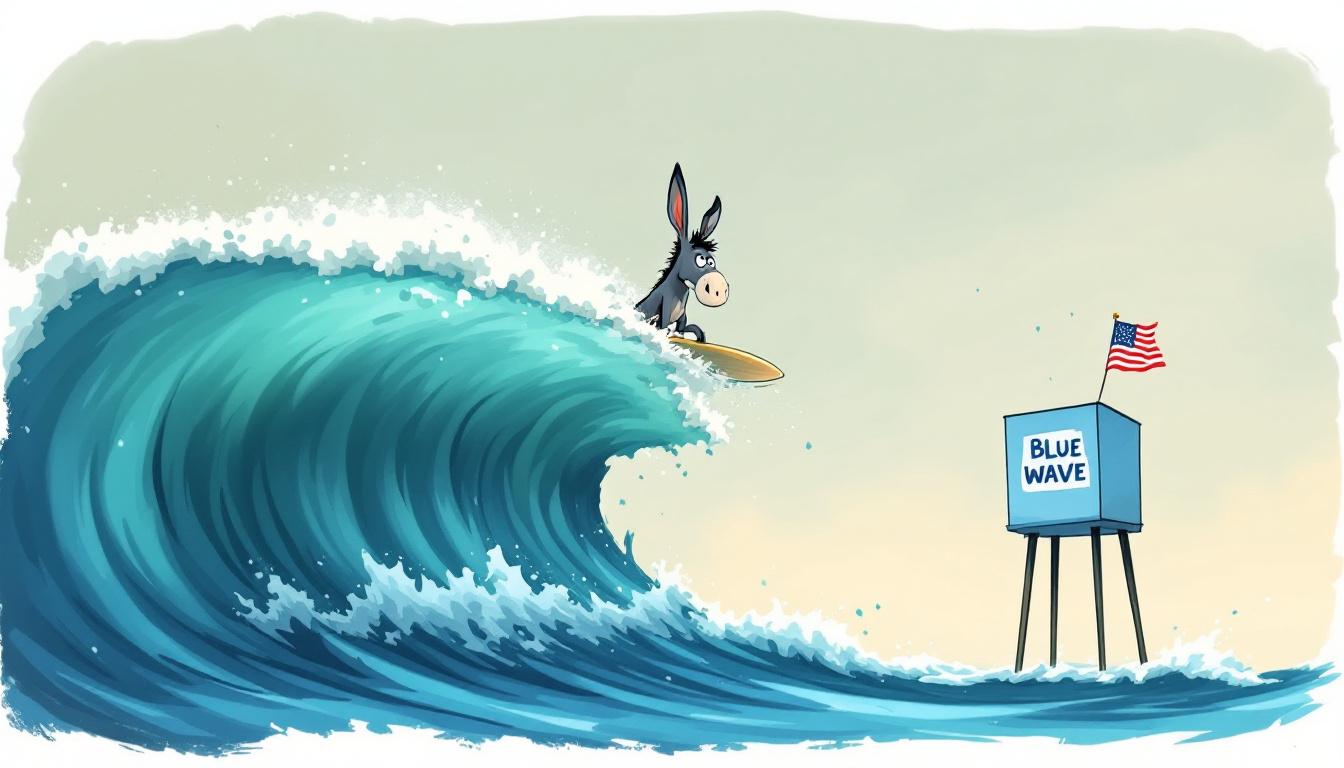
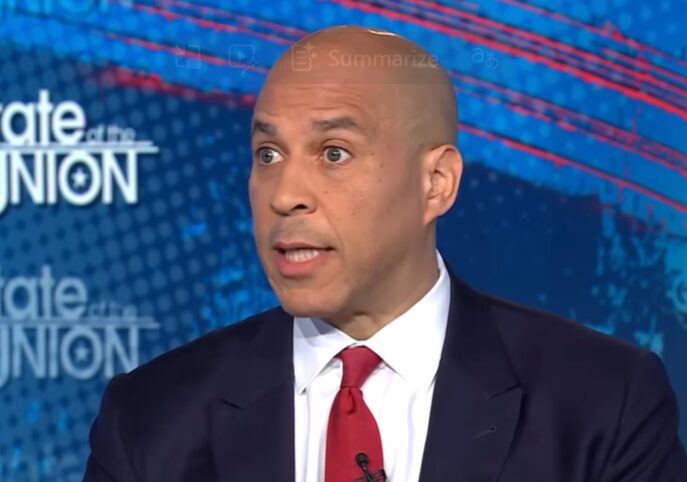
We’ve seen this movie before. It was called 2016. And 2024. And about four other elections where the “experts” had it all figured out right up until the moment they didn’t. But sure, let’s pop the bubbly based on a poll conducted by the network that gave Hillary Clinton a 91% chance of winning on election night. What could go wrong?
Let’s talk about what this poll actually says, because the details tell a very different story than the headlines. Yes, Democrats lead 45% to 42% among registered voters on the generic ballot. That matches their lead at this point in 2018, when they picked up 41 House seats. Sounds scary, right? Here’s the part CNN buried: Democrats’ party favorability is 28 points underwater. Twenty-eight. That means the people saying they’d vote for a Democrat in November don’t actually like Democrats. They just dislike Republicans more at the moment. That’s not a wave. That’s a protest vote held together with duct tape and vibes.
The CNN poll also found a category they’re calling “double haters” — voters who have negative views of both parties. That group breaks for Democrats by 31 points. Think about that. The Democrats’ entire electoral advantage is built on people who can’t stand either party but figure the blue team is slightly less terrible. That’s not enthusiasm. That’s resignation. And resignation doesn’t drive turnout. It drives people to the couch on Election Day.
Here’s what the blue wave crowd doesn’t want to talk about: the structural math. Democrats need a net gain of just three House seats to flip the chamber. Sounds easy, right? Except the 2022 redistricting gave Republicans a built-in advantage in dozens of competitive districts. The generic ballot has to be Democrats plus seven or eight before it actually translates into enough seats to flip the House. A six-point lead in April doesn’t get there. It gets close. Close is a participation trophy.
And then there’s the Senate. Republicans hold 53 seats. Democrats would need to flip four while losing zero. The map in 2026 includes Democratic incumbents in tough states and Republican incumbents in states that aren’t nearly as competitive as Democrats wish they were. The 79% Polymarket odds include flipping the Senate, which tells you everything you need to know about how seriously to take prediction markets run by people who also bet on whether it will snow in Miami.
Now, should Republicans be concerned? Absolutely. Here’s the honest truth: the party in the White House almost always loses seats in the midterms. That’s not a poll. That’s gravity. Since World War II, the president’s party has lost an average of 26 House seats in midterm elections. The Iran war is dragging on, gas prices are brutal, and the tariff situation has businesses and consumers on edge. Those are real headwinds, and anyone pretending otherwise is lying to you.
But headwinds and hurricanes are different things. The Democrats’ problem isn’t their polling. It’s their product. What exactly are they running on? “We’re not Trump” worked in 2018 because Trump was a novelty and the resistance energy was fresh. In 2026, “We’re not Trump” is a rerun of a rerun. Voters have heard it. They’ve priced it in. The Democrats running on affordability is genuinely hilarious given that inflation exploded under Biden, grocery prices are still 25% higher than they were in 2020, and the party’s signature legislative achievement — the so-called Inflation Reduction Act — did approximately nothing to reduce inflation. Running on affordability when your last president made everything unaffordable is a bold strategy. Let’s see if it pays off.
The media is desperate for a blue wave narrative because it’s good for ratings and because most of them are openly cheering for it. CNN, MSNBC, the New York Times — they spent 2024 telling you Biden was sharp as a tack and that Kamala Harris was going to crush it. How’d that work out? These are the same outlets that had Kerry winning in 2004, that had Clinton winning in 2016, and that had the red wave of 2022 as impossible until it turned into a red trickle they could celebrate. Their track record on predicting elections is roughly equivalent to a coin flip, except a coin flip doesn’t lecture you about democracy being at stake.
Here’s what actually matters between now and November. Candidate quality. Turnout mechanics. Whether Republicans can recruit strong challengers in competitive districts or whether they nominate the kind of candidates who lose winnable races. Whether the economy improves or deteriorates. Whether the Iran situation resolves or escalates. Whether gas prices come down or keep climbing. None of that shows up in a generic ballot poll in April. None of it.
The Democrats’ six-point lead is real. It’s also April. In April of 2021, Biden’s approval was 54%. In April of 2009, Democrats had a 12-point generic ballot lead — and then lost 63 House seats in November 2010. April polls are snapshots, not prophecies. They measure the mood, not the outcome.
So here’s the bottom line for every conservative reading this. Don’t panic. Don’t get complacent either. The midterms are going to be a fight, and anyone telling you otherwise — from either side — is selling something. The Democrats want you demoralized so you stay home. The media wants you scared so you watch their coverage. Neither of them has your best interest in mind.
Show up. Vote. Bring a friend. That’s how you stop a wave — not with polls, but with people. The Democrats can measure all the drapes they want. We’ll see them in November.