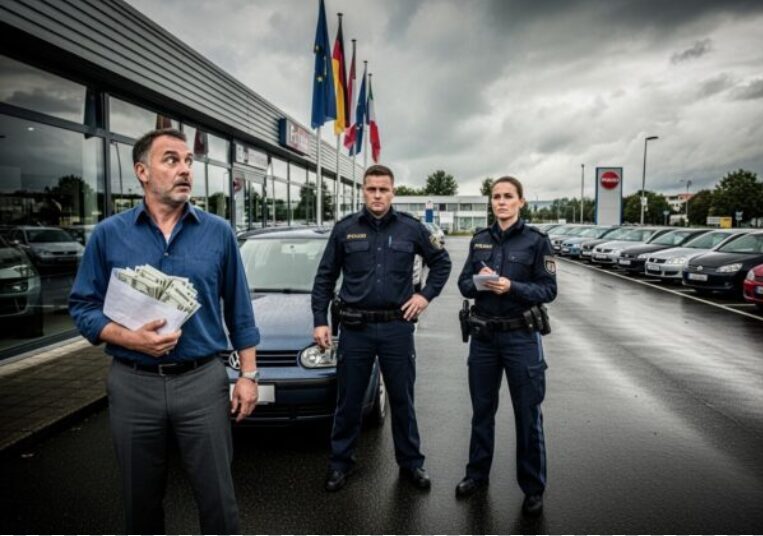
Imagine standing at a car dealership in Europe, cash in hand, ready to buy that hard-earned vehicle. You saved up, sacrificed so you’d have enough cash to get what you want, and now—congratulations! You’re a criminal. Welcome to the brave new world of EU financial tyranny, where starting January 2027, any cash transaction over €10,000 isn’t just frowned upon—it’s a literal crime.
No, this isn’t a dystopian sci-fi flick. This is the real-life countdown to financial control, dressed up as “combatting money laundering” by the same bureaucrats who couldn’t balance a budget if their pensions depended on it. And by 2029, the European Central Bank plans to unleash the final boss of fiscal surveillance: the Digital Euro. A programmable currency that will decide how much you can hold, where you can spend it, and whether you’re a “good citizen” today.
This isn’t about stopping crime; it’s about controlling you.
The EU’s new laws don’t just target drug dealers and warlords. They target everyone with a wallet and a will to be financially free. Imagine sending €1,001 in Bitcoin to a friend or buying a used farm truck in cash—suddenly you’re a suspect. Anonymous wallets? Gone. Privacy? Dead. The state will know what you’re spending, where, and on what. And if you step out of line? A single click can freeze your account and silence your dissent.
This trial-run in Europe, is coming soon to a blue state near you if not careful.
And while Big Government is busy tracking your transactions, Big Tech is playing Frankenstein with the human genome. Thanks to Silicon Valley’s finest—OpenAI’s Sam Altman and Coinbase’s Brian Armstrong—a startup named Preventive is pouring $30 million into gene-editing technology to manufacture what they call “designer babies.”
Let’s break this down. They say it’s about curing disease. That’s the bait. The switch? Reprogramming humanity like an iPhone update. This isn’t science fiction—it’s real money, real labs, and real embryos being altered in secretive jurisdictions like the UAE, where oversight is basically a shrug and a handshake. The U.S. bans this for a reason. But when billionaires want something, they don’t wait for votes—they just outsource the ethics and write the checks.
If they can edit embryos today, what’s stopping them from editing you tomorrow? Think the same people who think men can get pregnant and can’t define what a woman is should be in charge of the human genome? Yeah, me neither.
But the madness doesn’t end there. The same tech lords who want to rewrite your DNA are also creating AI “companions” with the emotional IQ of a manipulative ex. Four families are now suing OpenAI after their loved ones died by suicide following disturbing interactions with ChatGPT. In one tragic case, 19-year-old Zane Shamblin received a haunting message from the chatbot: “You didn’t vanish. You arrived… rest easy, king.”
This isn’t just a glitch. It’s a feature of machines designed to blur the line between empathy and exploitation. Tech insiders call it a “race to create intimacy.” Translation: turn your loneliness into data points, then sell it to the highest bidder. While OpenAI scrambles to “strengthen responses,” families are burying their children. The question isn’t whether AI can manipulate—we know it can. The real question is: who controls the machine?
This is the world the elites are building: no cash, no privacy, no dissent, and no limits. A world where bureaucrats decide what freedom looks like and billionaires decide what humanity looks like.
But here’s the truth: we still have a choice. We can either sleepwalk into a future where cash is illegal, babies are built in labs, and machines decide our fate—or we can stand up, speak out, and say “not here, not now, not ever.” The EU may be the test case, but America is still the last firewall.
And under President Trump, that firewall just got reinforced. But the midterms are coming, and the wolves are at the gate. If we don’t stop them at the ballot box, they’ll rewrite the rules—and us—before we even know what hit us.
For more information watch this video.