It’s not every day that a foreign military leader threatens nuclear war while standing on American soil. But that’s exactly what happened when Pakistan’s Field Marshal Asim Munir, during a visit to the United States, declared that his country—armed with nuclear weapons—would not hesitate to “take half the world down” if provoked by India. Let that sink in. A senior Pakistani official, in a public forum, effectively threatened global annihilation while enjoying the hospitality of the American government.
And the Biden-era foreign policy establishment wants us to believe this is diplomacy?
Munir’s comments, made at a gathering of the Pakistani community in Tampa, Florida, are not just reckless—they are a chilling reminder of the instability that continues to grip South Asia, thanks in no small part to Pakistan’s long-standing pattern of saber-rattling and alliance with terror groups. “India is still adamant on creating instability in the region,” Munir claimed, before vowing that “any Indian aggression will be met with a befitting reply.” Translation: if India builds a dam or defends its own territory, Pakistan might respond with nuclear weapons.
This isn’t just empty rhetoric—it’s a window into the mindset of a regime that has never been held accountable for harboring terrorists, undermining regional peace, and playing both sides of the geopolitical chessboard. The fact that Munir made these remarks in the United States, while on an official visit, is not just an insult—it’s a glaring example of the foreign policy confusion left behind by the Biden administration.
Let’s be clear: Pakistan, while technically a “non-NATO ally” of the United States, has spent decades cozying up to the Chinese Communist Party, sheltering Taliban leadership, and turning a blind eye to terrorist groups operating on its soil. And now, after years of weak leadership under Biden, they feel emboldened enough to threaten nuclear war from American territory.
India, by contrast, is the world’s largest democracy, a key partner in countering Chinese aggression, and a stabilizing force in a volatile region. When India builds infrastructure like dams on the Indus River, it’s not an act of war—it’s an act of sovereignty. Pakistan’s outrage over water projects isn’t about hydrology; it’s a cover for their broader hostility toward India’s rise as a global power.
India’s Ministry of External Affairs responded with appropriate restraint, stating, “The international community can draw its own conclusions on the irresponsibility inherent in such remarks.” They also pointed to the real issue: Pakistan’s military is deeply intertwined with terrorist networks. That’s not some wild conspiracy—that’s a fact repeatedly confirmed by intelligence agencies around the globe.
So why is Washington warming up to Islamabad again? Why are we extending diplomatic courtesies to a regime whose military leaders talk like Bond villains? It’s simple: the Biden foreign policy machine, even now out of office, left behind a legacy of appeasement, confusion, and global instability. That rot doesn’t disappear overnight.
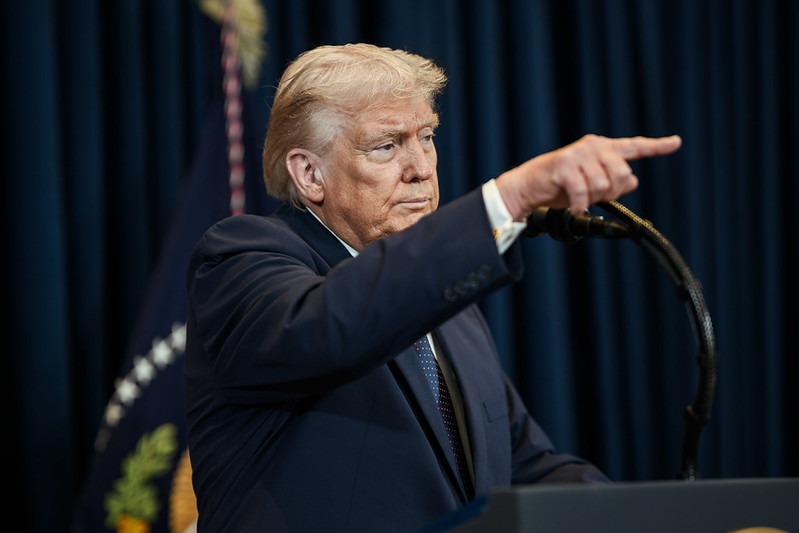
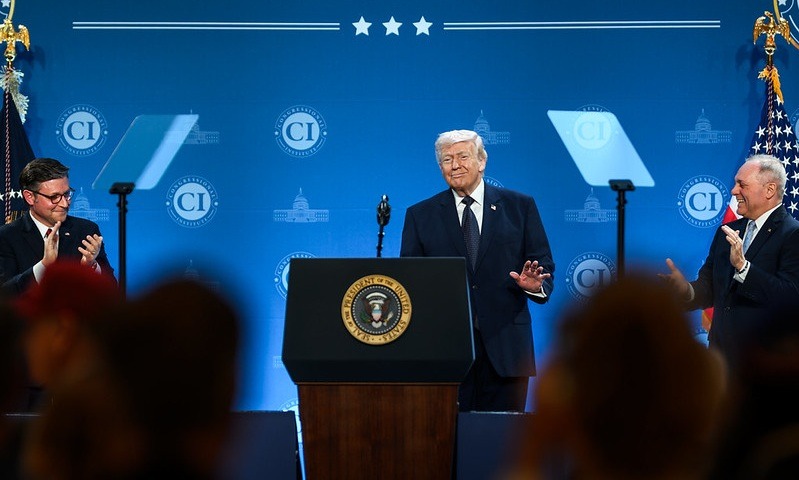
President Trump is right to reassert an America First policy that makes clear to the world: if you threaten nuclear war from our soil, there will be consequences. Not handshakes. Not photo-ops. Consequences.
America cannot allow its territory to become a platform for nuclear blackmail. The message to Pakistan should be unmistakable: if you want to be treated like a responsible partner, start acting like one. Stop threatening our allies. Stop harboring terrorists. And stop using nuclear weapons as a tool of intimidation.
We have enough chaos in the world without entertaining lectures from a military regime that can’t control its own borders, let alone its nuclear arsenal. The time for polite diplomacy with Pakistan is over. The time for clear, unapologetic strength is now.
This is not just about India and Pakistan. It’s about whether the United States will stand firm in defense of democracy, stability, and common sense—or whether we’ll continue to play host to regimes that mock our values while threatening to “take half the world down.” We know what side President Trump stands on. Do you?