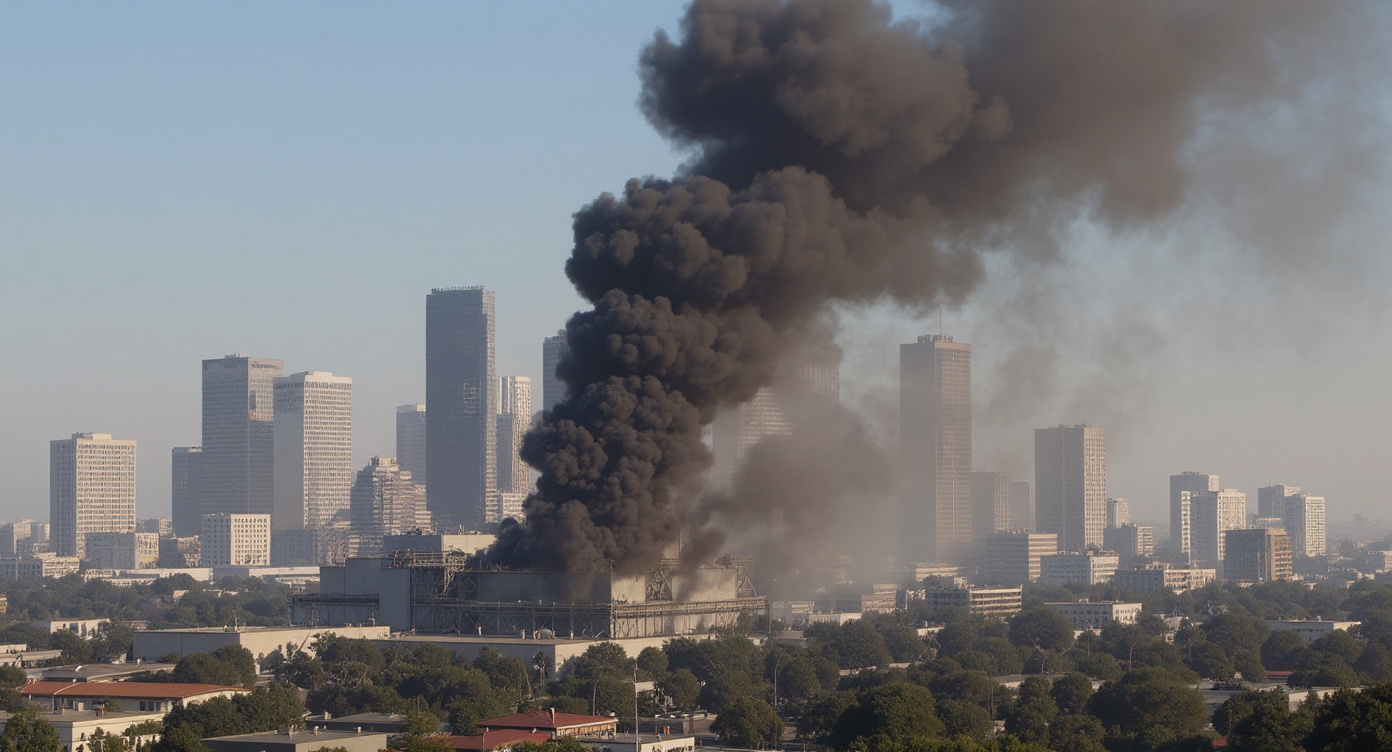
A cold storage warehouse on the 1400 block of South Los Palos Street in Los Angeles caught fire Wednesday afternoon. Firefighters put it out. Then it reignited on Thursday. As of this weekend, the Lineage Logistics facility in the Boyle Heights area is still burning — Day 5 and counting — with black smoke plumes visible from Dodger Stadium.
So naturally, Governor Gavin Newsom declared a state of emergency.
The proclamation came on June 20, 2026, according to 100 Percent Fed Up. "California is mobilizing to support Los Angeles as firefighters and emergency personnel continue their work to contain this fire and protect surrounding communities," Newsom said in a statement that could have been copied and pasted from any of his previous emergency declarations.
Cal OES Director Caroline Thomas Jacobs added that "Cal OES is working side-by-side with the City of Los Angeles, Los Angeles Emergency Management Department, Los Angeles Fire Department, and our regional partners to ensure they have the resources, information, and support necessary to respond to this incident."
That's a lot of agencies. A lot of partners. A lot of working "side-by-side." And the warehouse is still on fire.
Here's what's worth understanding about Newsom's emergency powers at this point: they've become a governance strategy, not a crisis response. California has cycled through so many states of emergency — wildfires, homelessness, COVID, gas prices, more wildfires — that the declaration itself has lost any practical meaning to the average Californian. It's not a signal that something extraordinary happened. It's a signal that the governor held a press conference.
The freezer area of a cold storage facility caught fire and couldn't be contained for five consecutive days in the second-largest city in the United States. Visibility at Dodger Stadium was compromised by smoke. Residents in Boyle Heights have been breathing in whatever a burning industrial freezer puts into the air since midweek.
Those are real problems. But an emergency declaration doesn't fix a fire department that can't extinguish a warehouse blaze in under a week. It doesn't explain why a single facility fire in Los Angeles County requires the governor to invoke emergency powers. And it doesn't address why California's infrastructure seems to generate these situations with the regularity of a bus schedule.
Newsom's critics would say the real emergency is the state's policy environment — the regulatory burden, the budget priorities, the hollowing out of basic services while Sacramento chases headlines. His defenders would say the declaration unlocks state resources and cuts red tape.
Both can be true. But when your state needs the governor to declare an emergency every time a building catches fire, the emergency isn't the building.
California has been governed by crisis for so long that crisis governance is just governance now. The warehouse will eventually stop burning. The next declaration is already loading.