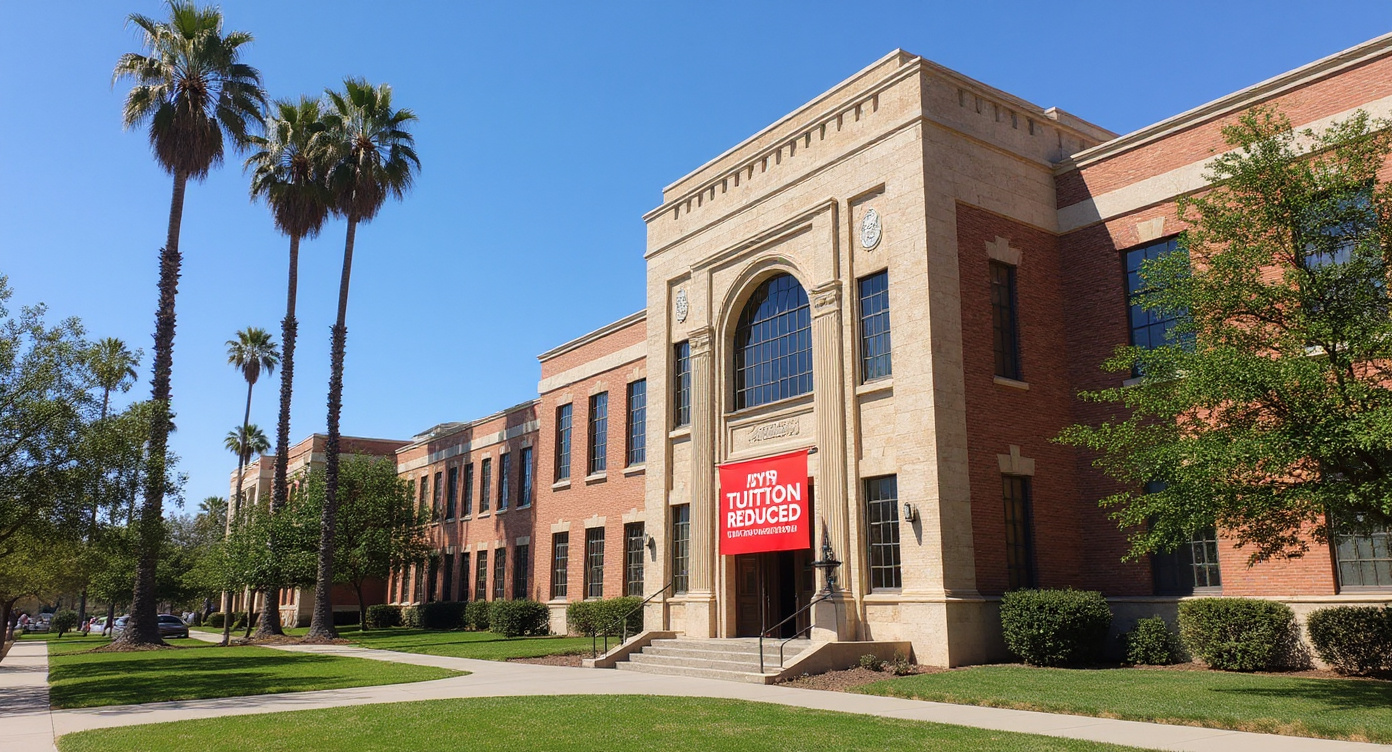
For decades, universities told us tuition simply had to keep going up — it was the cost of "excellence," they said, and if you didn't like it, take out another loan. The federal government was happy to oblige, handing out student loans with no price discipline whatsoever. Then President Trump signed the One Big Beautiful Bill Act, capped federal student loans, and wouldn't you know it — UC Irvine just slashed its MBA tuition to $99,000.
Amazing what happens when you turn off the free-money spigot.
Here's what makes this moment so satisfying. In 1987, Reagan's Secretary of Education William Bennett made a simple economic argument: federal student aid was causing tuition to rise. If the government kept handing students unlimited borrowed money, universities would simply raise prices to absorb it. Economists called it the Bennett Hypothesis. Universities called it heresy. Democrats called it an attack on higher education. For nearly 40 years, the higher-ed establishment and their allies in Washington dismissed this idea while tuition climbed relentlessly and student debt ballooned into a $1.7 trillion national crisis.
Trump just proved Bennett right. In a page of legislation.
The University of California Irvine's Paul Merage School of Business announced a price cut for its Flex MBA program, dropping tuition below the new federal loan cap for graduate business degrees. Dean Ian Williamson practically tripped over himself to spin it as innovation. "A University of California MBA, now priced below the federal loan cap. That combination simply didn't exist in this market before today," Williamson said, as reported by The College Fix.
Right. It didn't exist because universities had zero incentive to lower prices when Uncle Sam was writing blank checks.
The One Big Beautiful Bill Act set a $50,000 annual loan cap for professional degree students and a $200,000 total lifetime limit. Other graduate programs got capped at $100,000 lifetime. The moment those limits hit, suddenly schools discovered they could trim the fat after all. It took about five minutes for the market to do what forty years of Democratic policy could not.
Beth Akers, a Senior Fellow at the American Enterprise Institute, laid it out in terms even a university administrator could understand. "Economists have been able to show that expanded access to credit caused universities to raise the cost of graduate programs," Akers said. In other words: the government wasn't helping students afford college — it was helping colleges charge more.
Akers went further: "The thought behind the lower loan limits in the OBBB was that prices would likely fall in response to the contraction in federal lending." She even noted that reduced revenue might not hurt program quality at all — it might just hit "an entirely different part of the institutions."
Translation: fewer diversity deans and rock climbing walls.
And that's the part nobody in higher education wanted to talk about. Over the last thirty years, the number of university administrators has exploded relative to actual faculty. Entire bureaucracies were constructed around DEI offices, student wellness coordinators, sustainability directors, and inclusion specialists — all funded by the endless river of federal loan money flowing through tuition payments. The money was never going to better instruction. It was going to feed a bloated administrative class that produced nothing but more paperwork and more ideology.
Now the river has a dam in it. And suddenly those same institutions are finding efficiencies they swore didn't exist.
UC Irvine isn't even the first domino. Santa Clara University School of Law cut costs back in December 2025, offering a $16,000 scholarship in response to the same loan caps. The 2026-27 school year is shaping up to be a fire sale, and we're just getting started. Schools that spent years insisting their pricing was non-negotiable are now negotiating.
Here's the part that should make every Democrat who ran on "cancel student debt" genuinely uncomfortable. Obama expanded loan access. Biden tried to forgive debt with an executive order the Supreme Court struck down. Both were treating the symptom — unaffordable monthly payments — while the cause kept metastasizing. Every dollar of loan forgiveness just freed up more capacity for schools to raise prices again. It was a policy loop designed to keep students dependent and universities funded.
Trump broke the loop. He didn't forgive debt. He removed the mechanism that was creating it.
Sarah Austin, a Policy Analyst at the National Association of Student Financial Aid Administrators, acknowledged the obvious. "Reducing tuition is one of several expected responses from the new student loan limits," Austin said. She added that "there will be a funding gap for certain students due to these changes" — which is the polite way of saying some programs aren't worth what they were charging. That's not a crisis. That's a correction.
We spent years listening to the higher-ed cartel insist that tuition was a fixed cost of doing business, backed by economists who conveniently worked at the same institutions benefiting from unlimited loan access. Turns out tuition was just a function of how much borrowed money they could vacuum up before anyone noticed. William Bennett noticed in 1987 and got laughed out of the room.
Trump turned off the money. The prices are falling. The experts were wrong, and they knew it.