
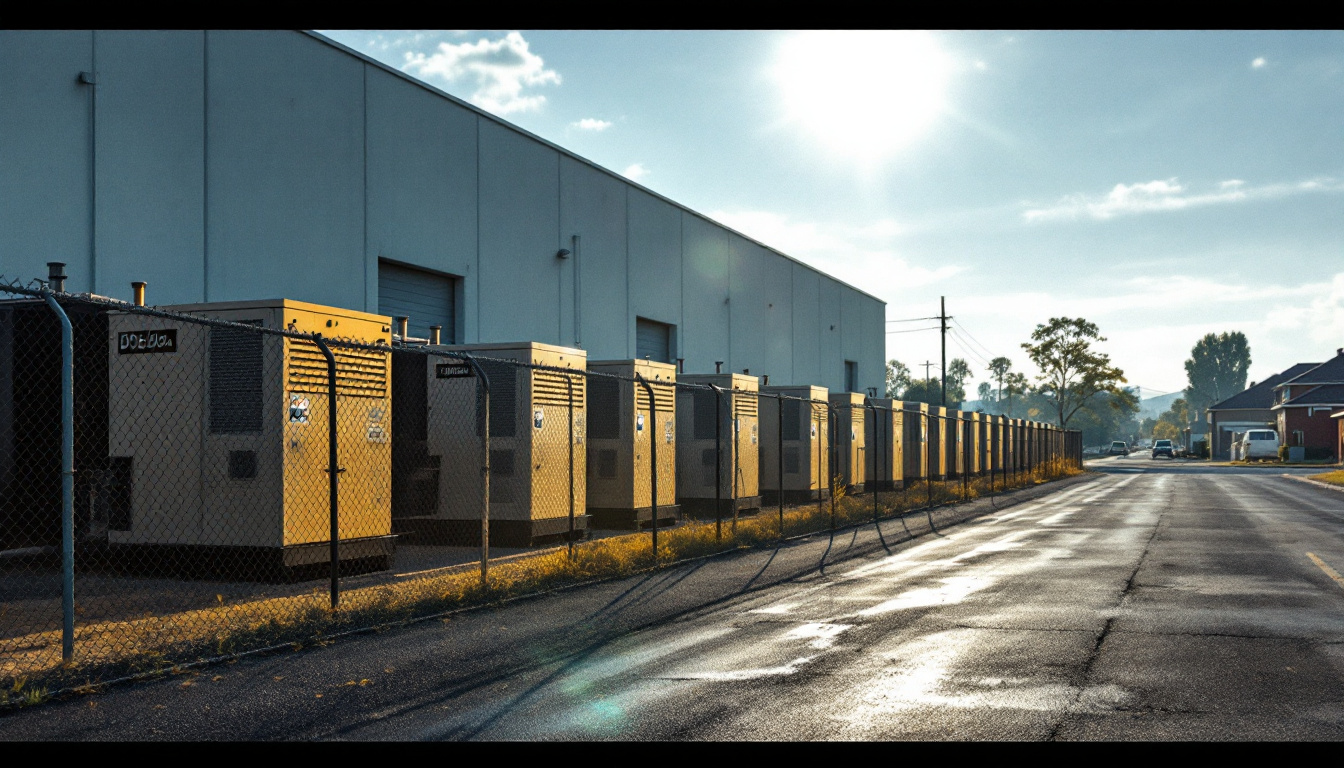
The mid-Atlantic power grid is bracing for a record-breaking 166 gigawatts of electricity demand this week — a number that would shatter the all-time high set back in 2006 — and the plan to keep the lights on involves firing up thousands of diesel generators at data centers across Virginia.
Diesel. The fuel your government spent the last decade telling you was killing the planet.
According to Newsmax, the grid operator PJM Interconnection, which serves 13 states and Washington, D.C., has authorized emergency procedures allowing data centers to switch from grid power to their backup diesel generators during peak demand. The idea is to free up electricity for households and first responders. The problem is what happens when you light up 8,000 diesel generators in neighborhoods where people actually live.
Virginia has approved more than 8,000 diesel generators for data centers in recent years, with nearly 3,800 additional units approved in 2025 alone. One-third of these facilities sit within 500 feet of homes or schools. Last summer, residents near Ashburn reported dark plumes of smoke billowing from data center generators — the kind of air quality event that, if it came from a coal plant, would trigger congressional hearings and a Netflix documentary.
Elena Schlossberg, who leads a grassroots group opposing data center expansion in Prince William County, put it plainly: "Nothing says life, liberty, and the pursuit of happiness like breathing in diesel fumes. Either way, we are screwed."
That's not a conservative talking point. That's a liberal activist admitting the green energy transition has a dirty little backup plan.
Aaron Tinjum, vice president of energy for the Data Center Coalition, offered the industry's response, saying the sector "will work closely with utilities and grid operators, using backup power if directed and where appropriate to reduce strain on the grid and ensure Americans and first responders remain connected." It's a reasonable-sounding statement that casually glosses over the fact that "backup power" means thousands of diesel engines running at full tilt next to elementary schools.
Brown University climate scientist Kim Cobb framed the heat wave itself as evidence of a larger trend. "This is exactly what we expect in a warming world," she said. "Even a modest increase in baseline temperature causes an exponential increase in heat extremes." Fair enough. But if heat extremes are the crisis, and the response to heat extremes is firing up 8,000 diesel generators, then perhaps somebody in the planning department should have anticipated this before approving 3,800 more of them last year.
Former New Jersey utility regulator Abe Silverman didn't sugarcoat the grid situation. "It's scary. It worries everyone when you see those kind of numbers," he said about the projected demand.
Ann Bennett of the Sierra Club of Virginia captured the anxiety on the ground: "This time, we are all anxiously anticipating what is going to happen, and we have thousands more generators to worry about."
Energy Secretary Chris Wright and the Department of Energy are navigating what amounts to a policy contradiction built by a previous administration. We spent years subsidizing renewable energy and demonizing fossil fuels while simultaneously approving a massive expansion of data centers — the most power-hungry buildings on the planet — with diesel backup as the fail-safe. The Environmental Protection Agency has authority over emissions from these generators, but emergency procedures effectively suspend normal limits when the grid is under stress.
This is the part nobody in Washington wants to talk about. The same government that tells you to buy an electric vehicle and swap out your gas stove has quietly built a network of diesel-powered server farms across one of the most populated corridors in America. The data centers powering your cloud storage, your streaming, your AI chatbots — all of it backed by the same fuel they've spent a decade telling you is an existential threat.
They didn't ban diesel. They just moved it next door to a school and called it infrastructure.