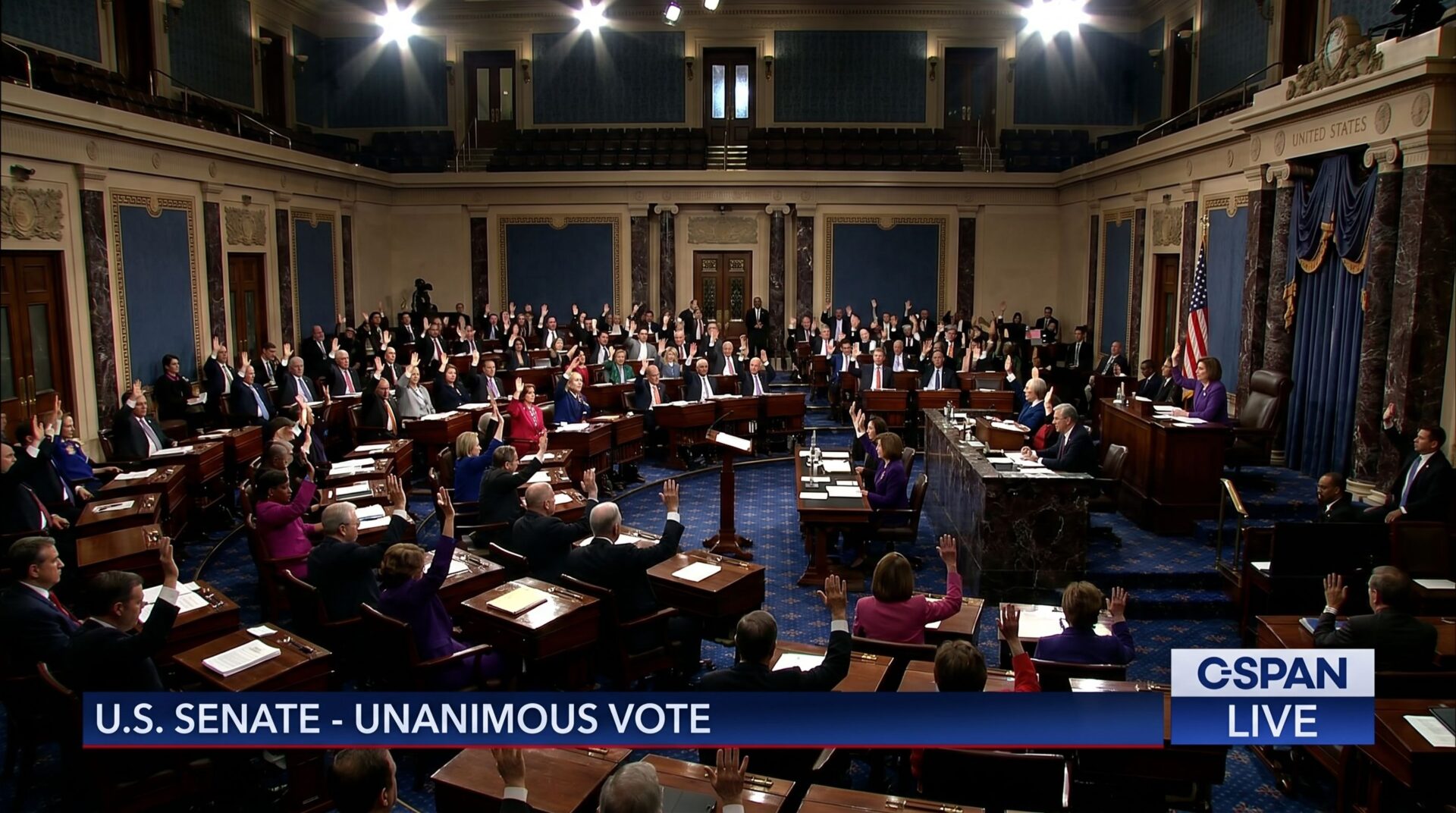
Well, folks, the United States Senate just did something truly historic. On April 30th, every single senator — all one hundred of them — voted unanimously to ban themselves from trading on prediction markets. That’s right. They all got together, looked at each other across the aisle, and said, “You know what? We should probably stop betting on the outcomes of legislation we literally write.” And then they patted themselves on the back like they’d just stormed Normandy.
Here’s the part that should make your blood boil: they banned prediction markets. Not stock trading. Not options. Not the thing where Nancy Pelosi’s husband somehow turns a congressional briefing into a $5 million Nvidia position. No, no — they banned the *new* thing. The thing regular people just started using. The thing that was making *their* insider advantage a little too obvious to ignore. How generous of them.
Let’s talk about what prediction markets actually are, because this matters. These are platforms — like Polymarket and Kalshi — where you can essentially place bets on real-world outcomes. Will a bill pass? Will the Fed raise rates? Will the next Supreme Court nominee be confirmed? Now imagine you’re a sitting United States senator. You don’t have to *guess* whether a bill is going to pass. You were in the meeting. You counted the votes. You wrote the amendment that changed everything at the last minute. Betting on prediction markets when you’re in the Senate isn’t gambling — it’s an ATM withdrawal.
So yeah, banning senators from that particular racket makes sense. We’re not arguing with the policy. What we’re arguing with is the audacity — the sheer, unbridled gall — of acting like this fixes anything.
Because here’s the elephant in the room that every senator walked right past on their way to the voting button: the STOCK Act. You remember the STOCK Act? Passed in 2012 with great fanfare. Supposed to stop members of Congress from insider trading. Had all the enforcement power of a Post-it note on a refrigerator. Members of Congress are still required to disclose trades, and they still routinely file those disclosures late — sometimes months late — and the fine is a whopping $200. Two hundred dollars. For a senator who just made six figures on a pharma stock the week before an FDA announcement they were briefed on.
A 2024 study found that congressional stock trades consistently outperform the market. Not by a little. By a lot. These people beat the S&P 500 like they’ve got tomorrow’s newspaper sitting on their desk. Because functionally, they do.
But sure. Let’s ban prediction markets. That’ll fix it.
Here’s what really happened. Prediction markets got popular fast. Too fast. Polymarket blew up during the 2024 election cycle. Suddenly regular Americans could see, in real-time, what the smart money thought was going to happen in Washington. And some of that smart money was clearly coming from people who *knew* things. The optics got bad. So the Senate did what the Senate always does — it addressed the optics and left the substance completely untouched.
Think about it this way. If your kid got caught stealing cookies, and you responded by banning cookies but leaving the entire cake unguarded on the counter, would you call that parenting? That’s what this vote was. It was theater. Beautiful, bipartisan, unanimous theater.
And speaking of unanimous — let’s linger on that word for a second. When was the last time the Senate agreed on *anything* unanimously? They can’t agree on the color of the sky. They can’t pass a budget. They spent three years fighting over whether to fund the government for six weeks at a time. But banning themselves from prediction markets? Oh, that sailed through like a greased bowling ball. No debate. No dissent. No lone wolf standing up and saying, “Hey, maybe while we’re at it, we should address the stock trading thing too.”
You know what a unanimous vote tells you? It tells you every single one of them had a reason to make this go away quickly and quietly. When a hundred politicians agree on something without a single objection, it’s not because the policy is good. It’s because the alternative — doing nothing and letting the spotlight stay on — was worse for all of them.
Senator Jeff Merkley, who sponsored the resolution, called it a matter of “public trust.” Public trust. That’s rich. This is the same body where members exposed for suspiciously timed stock trades during COVID briefings faced zero consequences. Zero. They got caught trading on pandemic intelligence while Americans were losing their businesses, their savings, and their loved ones — and the punishment was a sternly worded editorial in a newspaper nobody reads anymore.
We’re not asking for much here. We’re asking for the same rules that apply to every corporate executive in America. If a CEO trades on insider information, the SEC comes knocking. If a hedge fund manager front-runs a merger, he goes to prison. But if a senator dumps airline stocks after a classified COVID briefing? He gets to run for reelection.
So congratulations, Senate. You banned yourselves from the one market that was small enough to sacrifice without actually costing you anything. You put out a press release. You got your headline. And tomorrow, you’ll go right back to trading individual stocks based on information that no regular American has access to.
The prediction market ban isn’t a reform. It’s a decoy. And we’re not buying it.